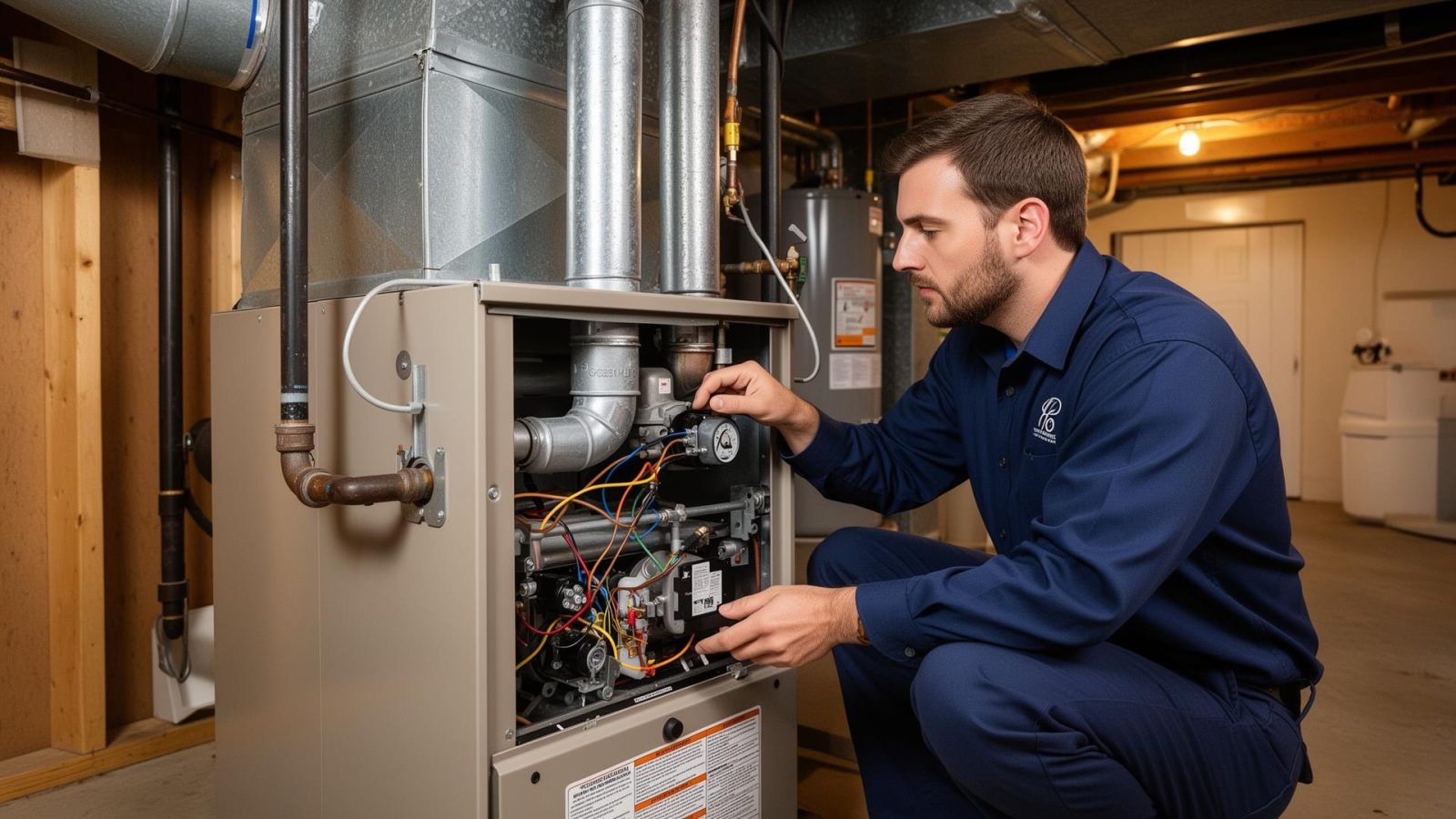
Furnace Maintenance
Keep your furnace safe, efficient, and reliable with professional maintenance from licensed gas fitters with over 30 years of experience.
Furnace Maintenance and Annual Tune-Ups
Your furnace works hard every winter. If you only think about it when something breaks, you are paying more than you need to, taking on more risk than you should, and likely putting up with comfort issues you don't have to live with.
A well-maintained furnace delivers improved energy efficiency, helps lower bills, and greatly reduces the risk of unexpected breakdowns. Regular maintenance ensures your system runs smoothly, saving you money and preventing sudden heating failures.
DJ Plumbing & Heating Service offers practical, no-nonsense furnace maintenance and yearly tune-ups from licensed gas fitters with more than 30 years of hands-on experience. Our goal is simple: keep your furnace safe, efficient, and reliable so you don't end up in a no-heat situation when you need it most.
If you need a furnace repair or a new furnace installation, we can help you.
Why Regular Furnace Maintenance Matters
Prevent Breakdowns Before They Happen
Most "surprise" furnace failures are not surprises to a trained tech. Parts wear out long before they quit. Dirt builds up slowly. Small issues snowball into big ones. During a proper tune-up, we look for early warning signs like:
- Motors drawing higher amps than they should
- Belts starting to fray or crack
- Sensors starting to foul with soot
- Drains starting to plug with slime or debris
- Burners that are just beginning to burn unevenly
Catching these minor issues early means you replace a single part on your schedule instead of waking up to a cold house and an emergency call.
Save Money on Energy Bills
A dirty, poorly tuned furnace must work harder to heat the same space. That means:
- Longer run times
- More gas burned
- Higher utility bills
Regular cleaning, proper airflow, and a correctly calibrated thermostat help your furnace reach temperature faster and cycle normally.
Extend the Life of Your Furnace
When a furnace runs with restricted airflow, dirty components, or wrong settings, it runs hot and stressed. That shortens the life of:
- Heat exchangers
- Motors and bearings
- Ignitors and controls
Annual maintenance keeps the system running within the manufacturer's limits. Over time, that can add years to the life of the furnace and delay the cost of a full replacement.
Protect Your Family's Safety
Any fuel-burning appliance needs regular safety checks. A yearly tune up is your chance to:
- Check for early signs of a cracked heat exchanger
- Test for gas leaks at valves and connections, especially in natural gas furnaces
- Ensure combustion gases are properly vented outside and not leaking into living spaces
- Confirm the venting is clear and sloped properly
- Make sure safety controls are doing their job
You do not need fear-based sales talk. You just need a licensed gas fitter to go through the system properly once a year and give you straight answers.
DJ Plumbing & Heating Service's Approach to Furnace Tune-Ups
Practical and Straightforward, Not Sales or Fear Driven. DJ Plumbing & Heating Service does not treat maintenance visits as a chance to upsell you on new equipment you don't need. Our approach is simple:
- We inspect, test, and clean properly
- We explain what we find in plain language
- We fix what needs to be fixed. We tell you honestly when it makes sense to plan for replacement instead of sinking more money into an old unit.
Preventative First, Not "Fix it When it Breaks"
We focus on preventative work:
- Performing annual inspection and regular inspections to catch issues like carbon monoxide leaks before they become serious
- Finding parts that are right on the edge of failure
- Fixing airflow and drain issues before they cause shutdowns
- Catching moisture and corrosion problems early
You still might need the odd repair over the life of the furnace, but regular tune ups cut down the number of surprises and the size of the bills.
Thorough, Not a "15-Minute Filter Change"
A proper furnace tune up is not just swapping a filter and shining a flashlight into the cabinet. We go beyond the box itself:
- The furnace
- The venting
- The condensate drain (for high-efficiency units)
- Basic duct and airflow issues
- Thermostat operation and cycles
You are paying for a licensed gas fitter to go through the system, not for a quick wipe-down.
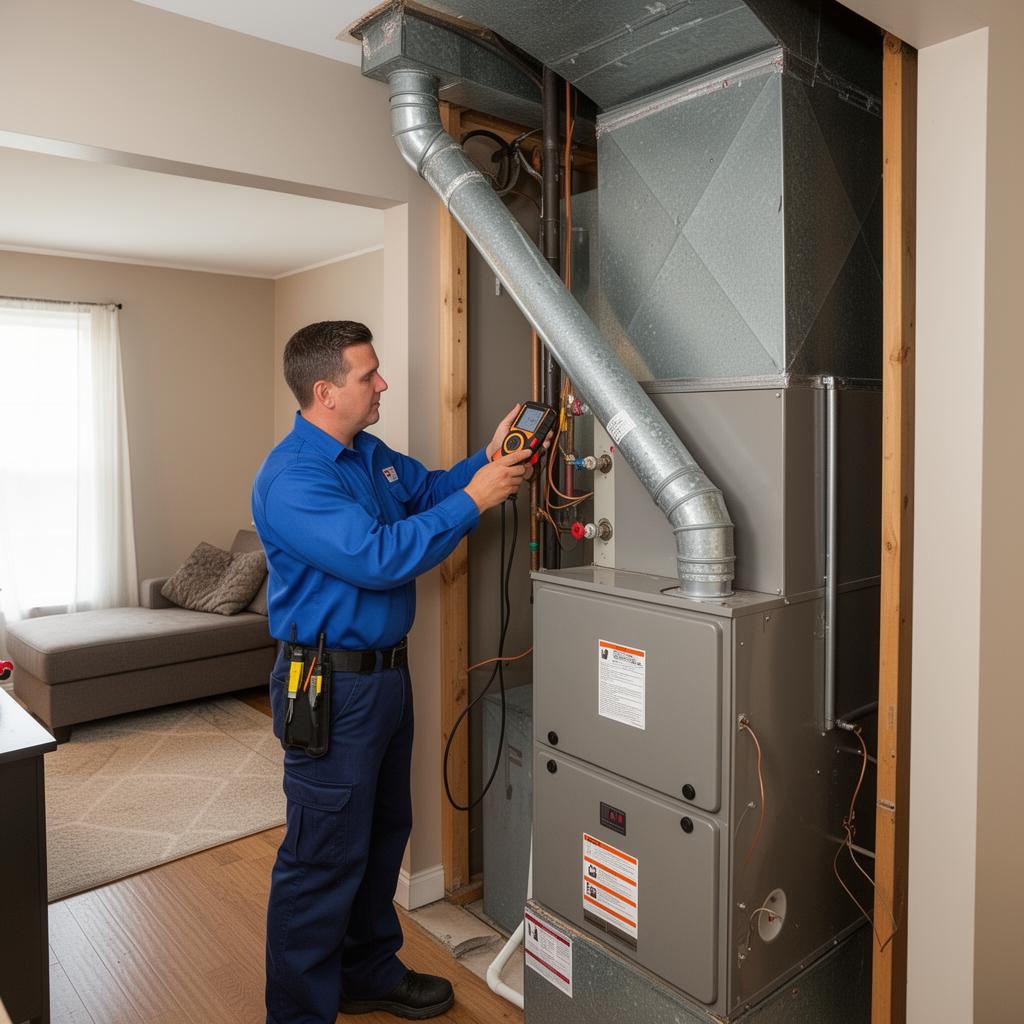
Every maintenance visit follows a structured checklist. Inspection and cleaning of key furnace components, such as burners, flame sensors, blower motors, and heat exchangers, are essential steps to ensure a well-maintained furnace. Here is what we typically do.
What's Included in a DJ Plumbing & Heating Service Furnace Maintenance Visit
- Inspect the heat exchanger for cracks, corrosion, or hot spots
- Test for carbon monoxide at the furnace
- Check gas piping and connections for leaks
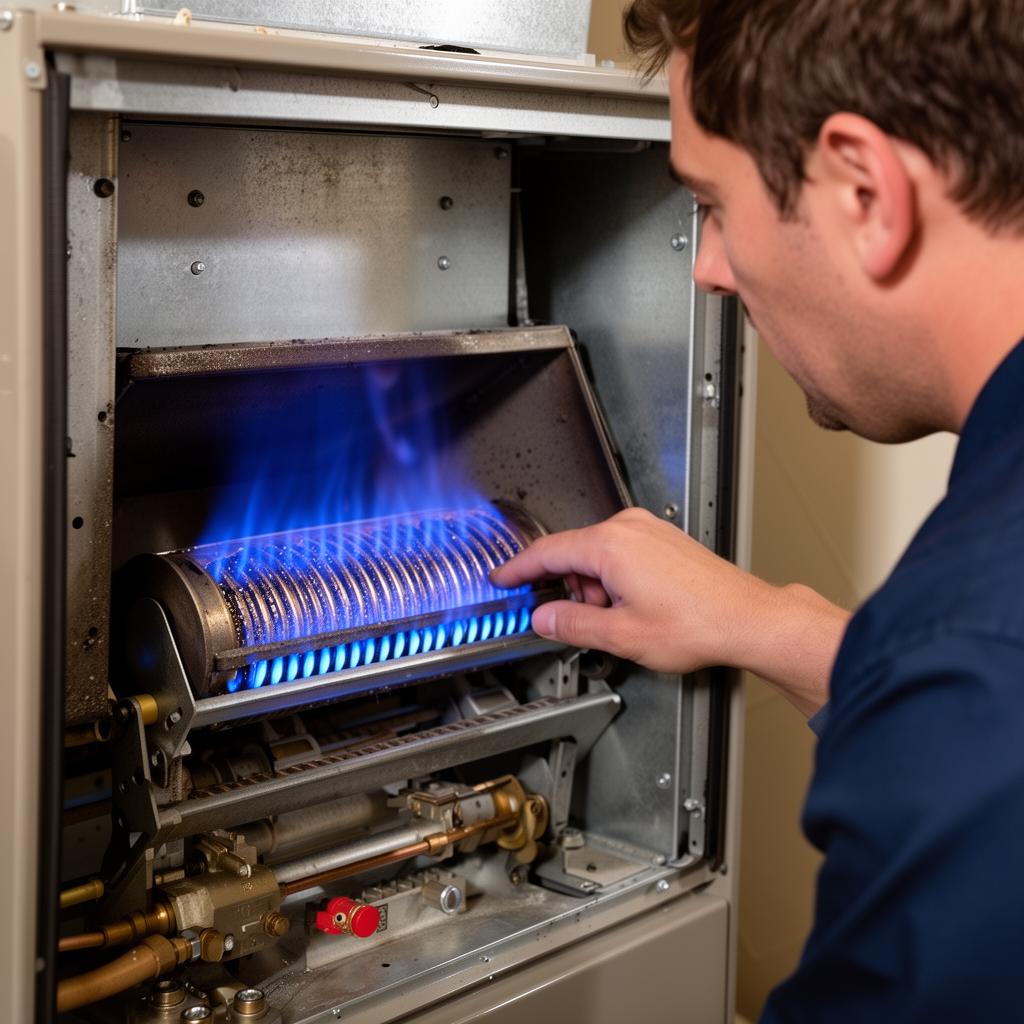
- Confirm the burner flame is stable and mostly blue
- Inspect the combustion chamber for soot buildup and corrosion
- Inspect the flue pipe for proper exhaust gas removal, checking for holes, corrosion, proper alignment, and secure connections
- Inspect the venting and flue for slope, rust, damage, and blockages
- Verify safety controls (limit switch, pressure switch, rollout) are working
Where it makes sense, we also check static pressure and basic airflow to see if the duct system is choking the furnace.
- Measure temperature rise across the furnace to confirm it is within spec
- Check blower and inducer motor amperage draw
- Listen for bearing noise, vibration, or startup issues
- Verify ignition sequence and flame sensing
- Check thermostat accuracy and operation, and adjust settings if needed
A good cleaning is essential to prevent issues, improve efficiency, and ensure safe operation.
- Inspect and either clean or recommend replacement for the furnace filter
- Clean the burner area and flame sensor
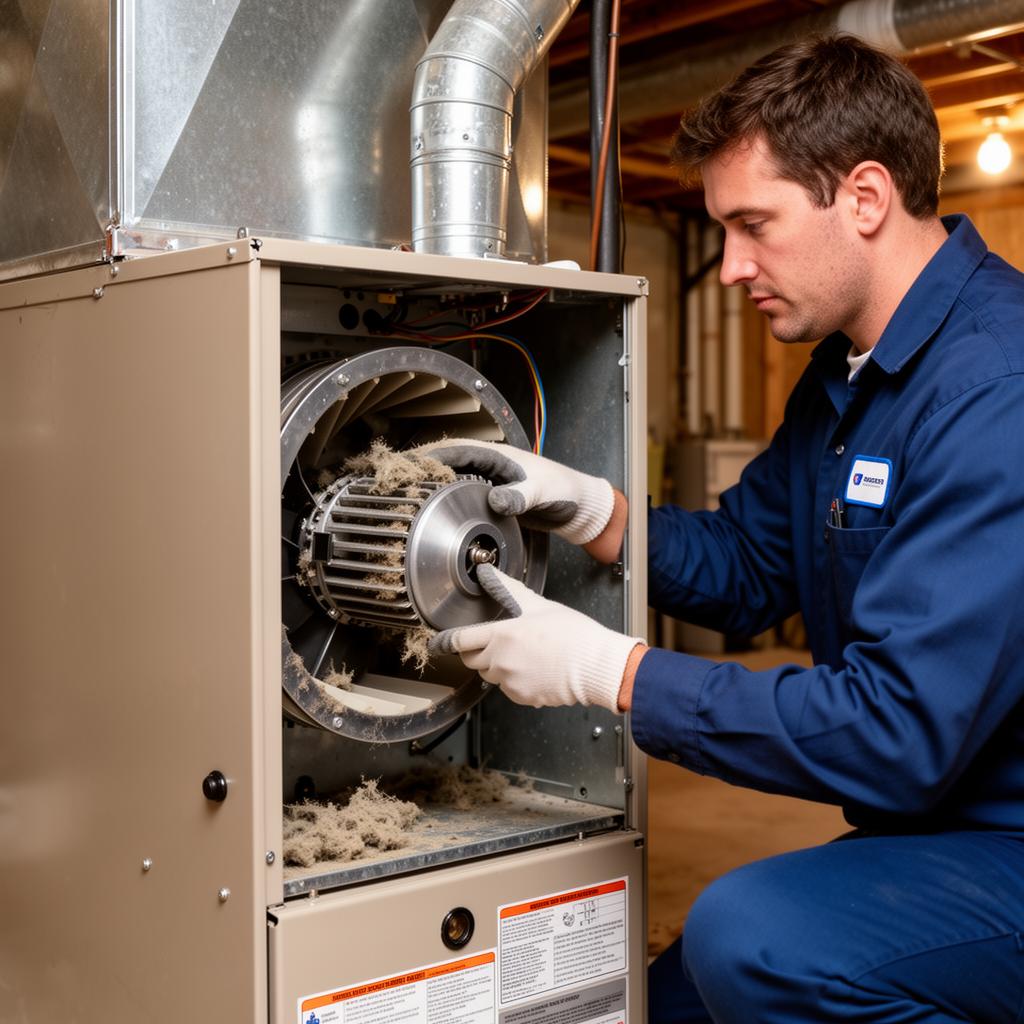
- Clean the blower wheel and blower motor if dust buildup is affecting performance
- Clean and inspect fan blades, ensuring they are balanced
- Clean vents and air return ducts to maintain proper airflow
- Clean the combustion chamber to help extend the life of the furnace
- Lubricate moving parts where the design allows
- For high-efficiency furnaces, clear and flush condensate traps and drain lines
If there are bigger duct problems hurting comfort or stressing the furnace, we flag them and talk through options.
- Look for obvious leaks, crushed sections, or disconnected runs
- Make sure supplies and returns are open and not blocked by furniture or storage
- Check for enough airflow by inspecting filters, vents, and ductwork for restrictions
- Note any rooms that seem to have airflow or temperature issues
- Check for and seal leaky air ducts to improve heating efficiency
You get honest, prioritized recommendations, not a scare list.
- What we checked
- What we cleaned or adjusted
- Any parts that are worn but still safe
- Any issues that need attention now or should be watched in the next few years
Common Problems Proper Furnace Maintenance Helps Prevent
Sudden No-Heat Breakdowns
Regular tune ups often catch:
- Draft inducer motors that are close to seizing
- Ignitors and flame sensors that are about to fail
- Condensate drains that are almost clogged
- Pressure switches that are sticking
Fixing these in advance can be the difference between a planned visit and a midnight emergency with no heat.
High Energy Bills and Short Cycling
A dirty blower, plugged filter, or thermostat issue can cause:
- Long run times
- Frequent on/off cycles (short-cycling)
- Uneven temperatures
- Increased energy consumption and higher utility bills
- Furnace overheating or complete shutdown caused by restricted airflow
Regularly checking and replacing dirty filters helps prevent these issues and keeps your furnace running efficiently.
Unsafe Operating Conditions
Without maintenance, you might never notice:
- A heat exchanger that has started to crack
- Loose venting that can spill exhaust
- Gas fittings that are weeping slightly
- Electrical connections that are overheating
Regular inspections are essential for furnace maintenance, as they can detect gas leaks and other issues that could pose serious health risks.
Poor Air Quality and Dust
Over time, dust and debris build up on:
- The blower wheel
- Inside the cabinet
- Air filters that are not changed often enough
Dirty air filters reduce indoor air quality and can cause system issues. Proper cleaning and filter care help keep the air cleaner and reduce strain on the equipment.
An Annual Tune-Up that Prevented a Major Breakdown
Problem: A long-time customer booked their usual yearly maintenance. Their furnace was about 14 years old and still running fairly quietly.
Solution: During the tune up, we noticed the draft inducer motor was starting to draw more amperage than normal and the bearings had some play. It was not screaming yet, but it was close. We replaced the inducer motor before it failed.
Outcome: If that part had seized during a cold spell, the furnace would have shut down completely. Instead, they had a normal maintenance visit, no emergency call, and their furnace finished the winter without a problem.
Finding Dangerous Issues Homeowners Didn't Know About
Problem: On another maintenance visit, we inspected a furnace that had not been checked professionally in years.
Solution: What we found: heavy rust and a visible crack starting in the heat exchanger, venting with corrosion and poor slope, and a burner flame that was yellow and unstable.
Outcome: We shut the furnace down, tagged it unsafe, and explained the situation clearly to the homeowner. They had no idea anything was wrong because the furnace still "seemed" to be working. This is exactly why annual maintenance matters.
A Neglected Furnace Brought Back to Safe Operation
Problem: We were called to look at a system that had never had a proper tune up. Inside we found a filter so clogged it had started to bend, a blower wheel packed with dust and debris, signs of moisture and early rust around the burner area, and a condensate drain line half blocked with slime.
Solution: We cleaned the blower, removed the old filter, replaced it with a new one, cleared the drain, and checked the rest of the system for damage.
Outcome: The furnace ran quieter, airflow improved, and the homeowner finally understood how far things had been pushed. They now schedule annual maintenance and keep on top of filter changes.
A Maintenance Visit that Instantly Improved Comfort and Reduced Bills
Problem: During the tune up we found a severely plugged filter restricting airflow, a blower wheel coated in dust, and a thermostat that was slightly out of calibration.
Solution: We cleaned the blower, replaced the filter, recalibrated the thermostat, and checked static pressure.
Outcome: When the furnace turned back on, the difference at the vents was obvious. Airflow was stronger and the temperature difference between floors dropped. A few weeks later, they told us their gas bill was lower and the home finally felt evenly heated.
What We Check that Many Techs Skip
Combustion Analysis and Gas Pressure
We do more than glance at the flame. Where appropriate, we:
- Check that gas pressure is within the manufacturer's range
- Confirm the flame is stable and burning efficiently
This protects both efficiency and safety.
Detailed Heat Exchanger and Venting Inspection
We take time to look for:
- Hairline cracks and hot spots on the heat exchanger
- Rust, sagging, or poor slope in vent pipes
- Loose joints and possible points of exhaust leakage
These are not things you can check in 30 seconds.
Blower, Static Pressure and Airflow
Airflow is just as important as the furnace itself. We look for:
- Dirty wheels and plugged filters
- High static pressure where it can be measured
- Duct issues that are clearly choking the system
- Inspecting and cleaning the blower compartment to remove dust and debris
- Inspecting the drive belt for cracks or frayed areas
If the furnace cannot move air properly, every part of the system is under more stress.
Condensate Drainage on High-Efficiency Furnaces
High-efficiency units create condensate. If it does not drain properly, you can get:
- Water backing up into the furnace
- Nuisance shutdowns from float or safety switches
- Moisture and rust inside the cabinet
We clear and test drains and traps so water goes where it should.
Full Safety Control Sequence
We do not just assume safeties work. We test:
- Limit switches
- Pressure switches
- Flame sensing and shutdown
That way, if something does go wrong later, you know the safety controls have been checked and are ready to do their job.
Filters, Thermostats and What Homeowners Should and Shouldn't Touch
Choosing and Changing Furnace Filters
The best thing you can do yourself is look after the filter. Simple guidelines:
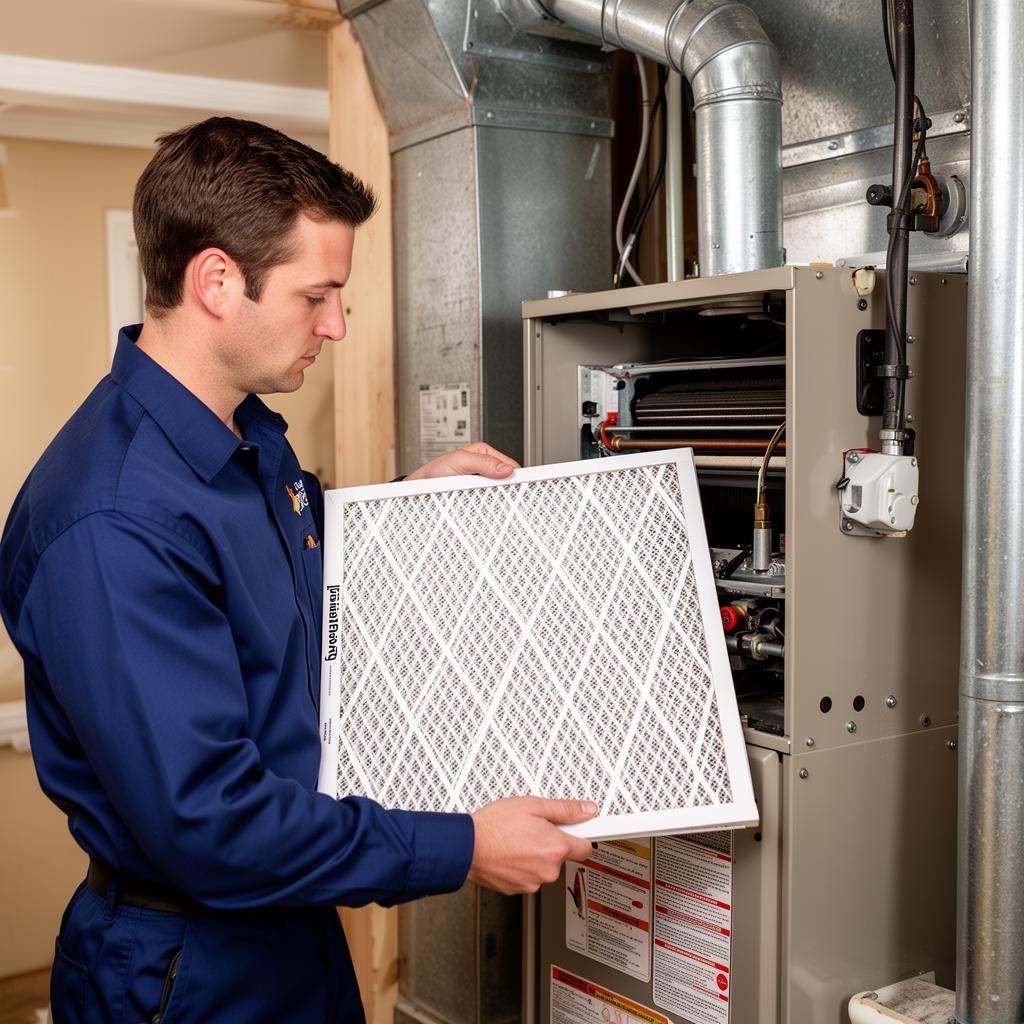
- Use a decent pleated filter with a reasonable MERV rating so it catches dust but does not choke airflow
- Check the filter every 1–3 months depending on pets, dust, and how often the furnace runs
- Replace it when it looks dirty, not once a year "when you remember"
A clean filter protects your furnace and improves air quality.
Smart, Simple Thermostat Settings
You do not need complicated tricks. For most homes in heating season:
- Set a comfortable temperature and avoid big swings up and down
- Use small setbacks when you are away or sleeping if you like, but don't constantly crank the thermostat to "force" more heat
Short cycling and big swings are hard on the system and often waste more fuel than they save.
Safe for Homeowners
Leave to a Licensed Gas Fitter
How Often Should You Schedule Furnace Maintenance?
Recommended Frequency
Once a year is the standard. A yearly tune up before the main heating season is usually ideal. You may want to be more strict with timing if:
- You have pets or a dusty home
- You have had past issues with moisture, corrosion, or plugged drains
- Your furnace is older and you want to squeeze as many safe years out of it as possible
Signs Your Furnace Needs a Tune-Up Now
Even if it has been less than a year, your furnace likely needs service if you notice:
- New or louder noises like banging, squealing, or grinding
- Hot and cold spots that are worse than usual
- Longer run times or the house never quite reaching the set temperature
- A jump in your gas bill without a change in weather or usage
- Frequent on/off cycling
These are all hints that something is off and the furnace is not running the way it should.
Why Waiting for a Breakdown Can Cost More
If you wait until something fails:
- You pay more for emergency service
- You have less time to compare options
- You risk extra damage to other parts of the system
- You deal with the stress of having no heat at the worst possible time
A simple yearly tune up is almost always cheaper than one big crisis.
Common Safety Issues We Catch During Tune-Ups
Any gas furnace can produce carbon monoxide if something is wrong. That does not mean you should be scared of it. It means you should respect it. During routine maintenance, we often find these issues. Most of these are easier and cheaper to fix when they are small.
CO Detector Placement and Testing
Basic guidelines for keeping your home safe. These are simple, cheap steps that add a lot of safety.
Common Furnace Maintenance Myths
Myth: "If it's running, it doesn't need maintenance"
Fact: Waiting until something breaks is the most expensive way to own a furnace. A system can be "running" and still be unsafe, inefficient, or moments away from failure.
Myth: "Closing vents in unused rooms saves money"
Fact: Closing too many vents creates pressure issues in the duct system. That can make the furnace noisier, cause it to overheat, and put extra stress on the heat exchanger and blower.
Myth: "I can do everything myself with online videos"
Fact: There are safe DIY tasks and unsafe ones. Changing filters and keeping vents clear is great. Working on gas lines, controls, or internal furnace parts without training is not. It is also about keeping your warranty valid.
Why Choose DJ Plumbing & Heating Service for Your Annual Furnace Tune-Up
30+ Years of Furnace Experience
We have been working on furnaces for decades and are familiar with most major brands, including:
- Lennox
- Trane
- Carrier
- Goodman and Amana
- Rheem and Ruud
- York
- Daikin
- Napoleon
If it is a common gas furnace brand, there is a good chance we have worked on it many times before.
Licensed Gas Fitters, Not Salespeople
Your furnace is serviced by licensed, insured gas fitters who care about doing the job properly and to code. We focus on safety, performance, and honest advice, not hitting a sales target.
Clean, Respectful Service in Your Home
We treat your home like a home, not a job site. That means:
- Protecting floors and nearby areas where we work
- Keeping tools and parts organized
- Removing old filters and debris
- Leaving the space tidy when we are done
We also explain what we are doing and why, so you are not left guessing.
Clear Communication and No Surprise Charges
Before we replace any parts beyond the basic tune up, we tell you:
- What is wrong
- What it will cost
- Whether it is urgent or can wait
You decide how to move forward. No surprise add-ons at the end.
Frequently Asked Questions About Furnace Maintenance
Get a Free Quote Today
Fill out the form below and one of our team members will contact you within 2 hours during business hours.
Why Request Service Online?
Fast Response
We respond to all online requests within 2 hours during business hours.
Upfront Pricing
Receive a detailed quote before any work begins—no surprises.
Flexible Scheduling
We'll work around your schedule to find a time that works for you.
Heating Contractor Service Areas
We proudly provide heating contractor in:
Schedule Your Furnace Tune-Up with DJ Plumbing & Heating Service
A yearly furnace tune up is one of the simplest ways to protect your home, your comfort, and your wallet. It keeps your system running safely, helps prevent surprise breakdowns, and keeps energy bills in check. If it has been a year or more since your last service, now is a good time to book. We will take a thorough, practical look at your system and keep it ready for the next heating season.